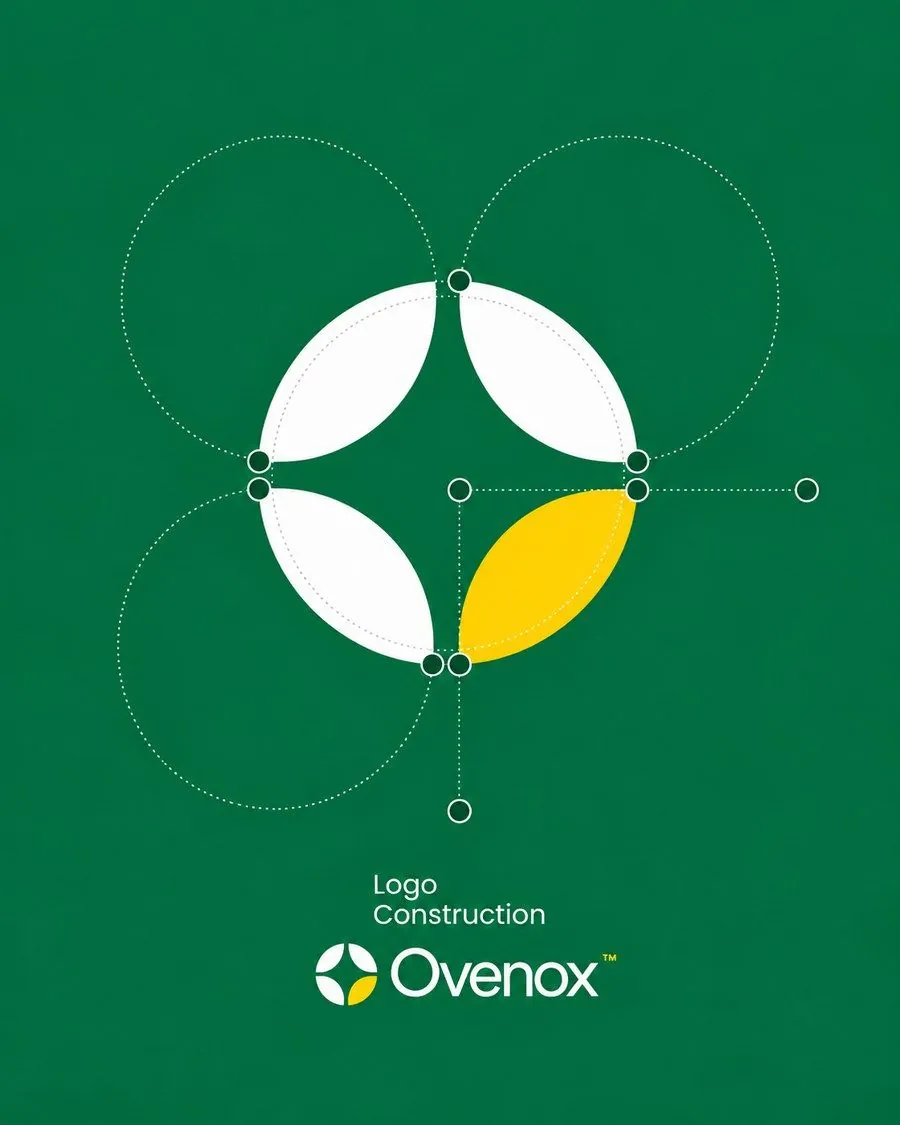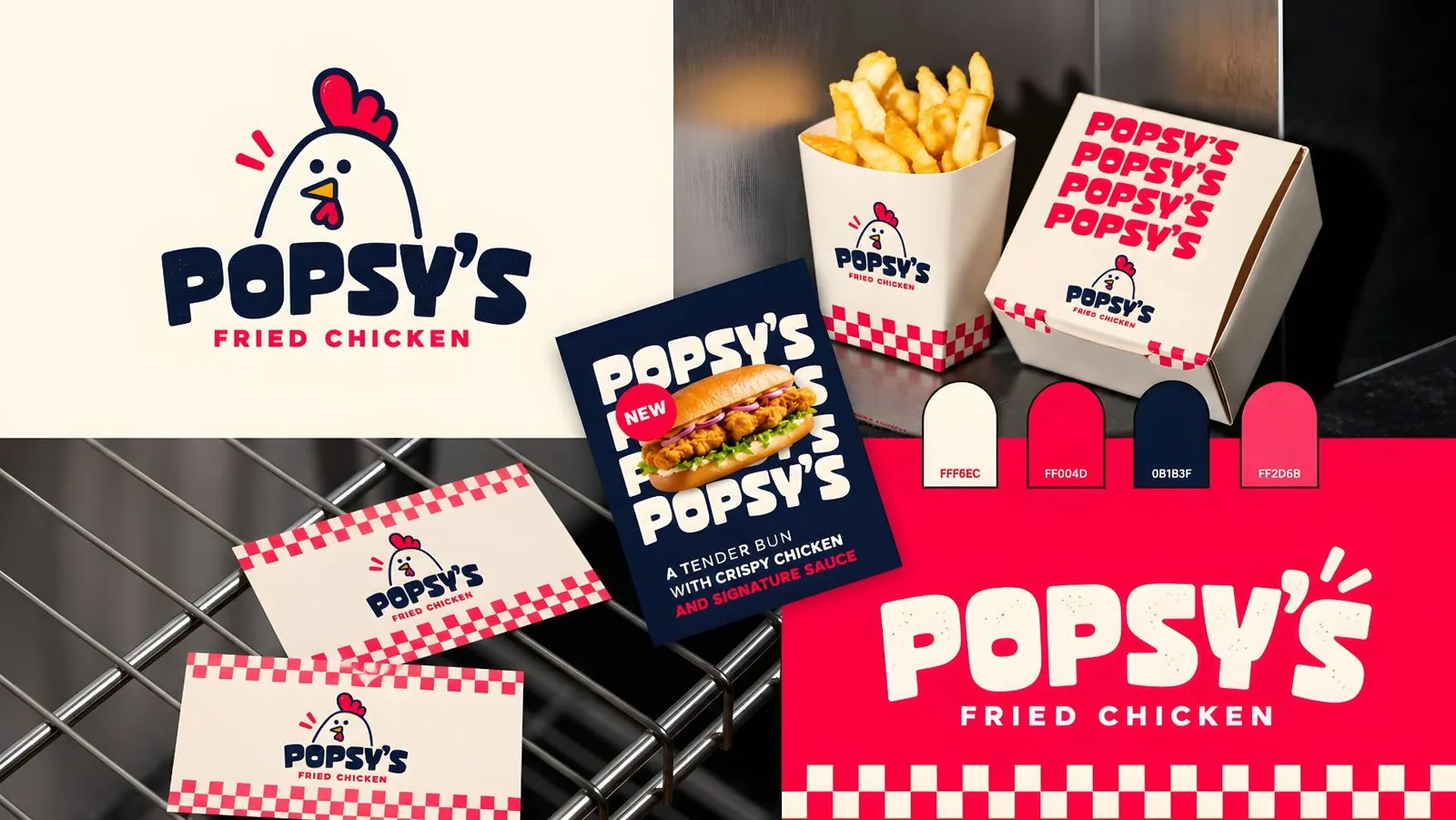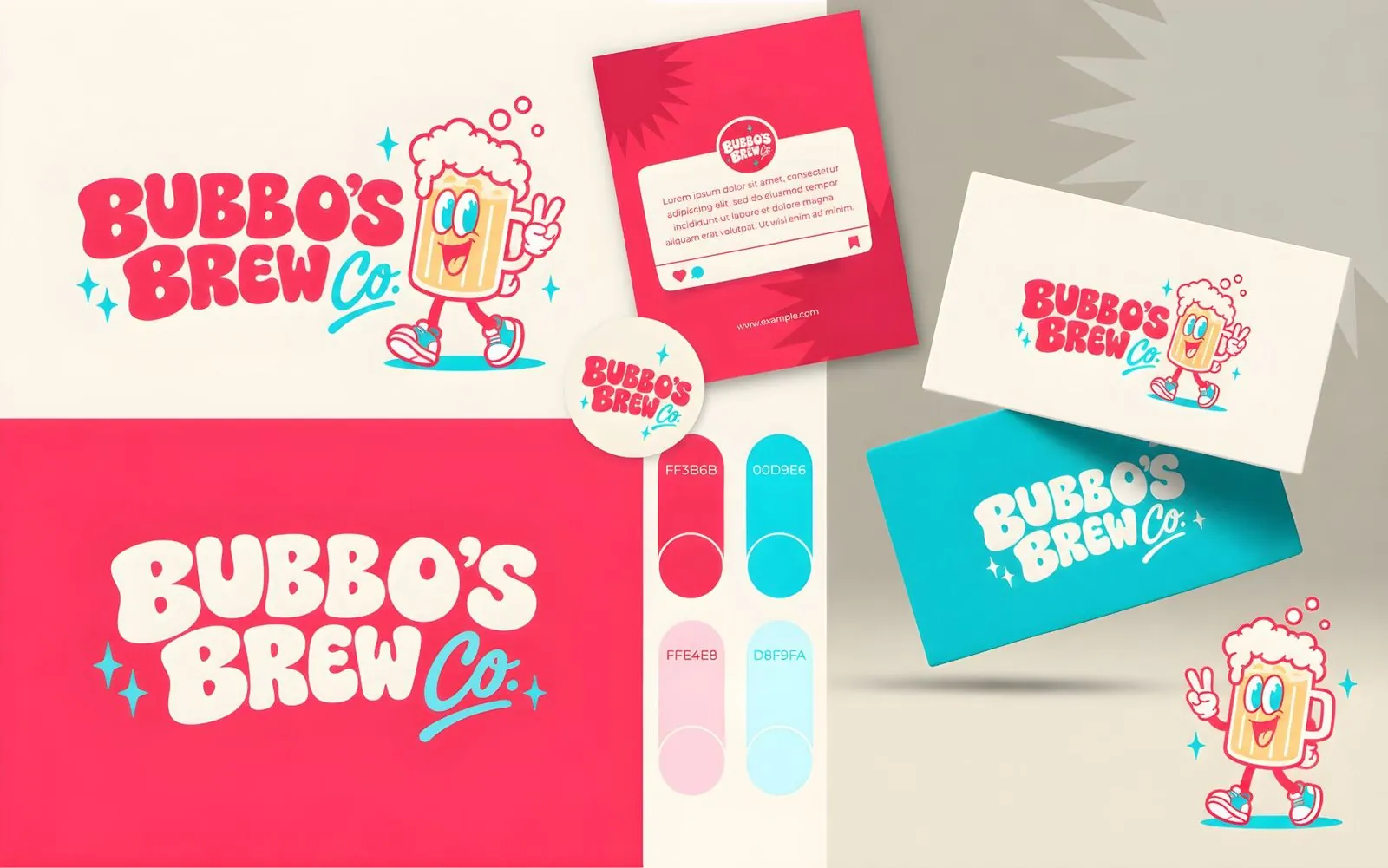
When founders ask for “a logo”, what they usually need is a brand identity: the logo plus the system of colors, type, files and rules that makes everything you publish look like it came from the same company.
Here’s the short answer. A complete brand identity includes a primary logo and its variations (stacked, horizontal and an icon), a color palette with exact codes for screen and print, a typography system, the full set of export files, a brand guidelines document, and a starter set of real-world applications like business cards and social media assets. Larger projects add strategy, brand voice and imagery direction on top.
If a quote only lists “logo design”, you’re probably getting one piece of that list. Use the checklist below to see what’s actually in the package before you pay.
What is a brand identity, and how is it different from a logo?
A logo is one mark. A brand identity is the visual system around it.
The difference shows up the first time you need something the logo alone can’t answer. Which blue is it, exactly? What font goes on the website? Can the logo sit on a photo? What goes in the tiny circle on Instagram?
It also pays off in consistency. In a Lucidpress (now Marq) survey of more than 200 organizations, companies with consistently presented brands reported revenue gains of up to 33%. The same report found that 81% of companies still deal with off-brand content. That’s survey data, not a guarantee, but the direction is clear: a system that people can follow beats a logo file and good intentions.
The brand identity checklist at a glance
| Deliverable | What it should include | Why it matters |
|---|---|---|
| Logo system | Primary logo, horizontal and stacked versions, icon or monogram, one-color versions | One mark can’t fit a website header, a favicon and a shop sign equally well |
| Color palette | Primary and secondary colors with HEX, RGB, CMYK and ideally Pantone codes | Screens and printers read color differently |
| Typography | Headline and body fonts, sizes, weights, and where to get the licenses | Keeps your website, decks and social posts consistent |
| File package | Vector (SVG, AI or EPS, PDF) and raster (PNG, JPG) files, in color, black and white | Printers, sign-makers and developers each need different formats |
| Brand guidelines | Logo usage rules, clear space, minimum size, misuse examples, color and type specs | Lets anyone, not just your designer, use the brand correctly |
| Applications | Business card, social profile and post templates, mockups | Shows the system working in real life before you launch |
| Strategy and voice (larger packages) | Positioning, audience, tone of voice, key messages | Makes the look and the words point in the same direction |
Now let’s go through each one.
Which logo versions do you actually need?
Most businesses need at least four:
- Primary logo: the full version you use most often, usually the symbol and name together.
- Horizontal and stacked versions: the same logo rearranged so it fits a wide website header or a square space without shrinking to nothing.
- Icon or monogram: a compact mark for app icons, favicons and social profile pictures.
- Single-color versions: all-black and all-white versions for dark backgrounds, embroidery, stamps and one-color printing.
The icon matters more than most founders expect. Social profile pictures are small: Instagram, for example, displays them at 110 x 110 pixels and crops them into a circle. Google recommends favicons larger than 48 x 48 pixels, and the icon still has to be recognizable when it shows up next to your site in search results. A long wordmark squeezed into that space just turns into a blur.
What should the color palette include?
A palette is more than “we like dark green”. A useful one includes:
- Primary colors (usually one to three) that carry the brand.
- Secondary or accent colors for highlights, buttons and charts.
- Neutrals for backgrounds and body text.
- Exact codes for every color: HEX and RGB for screens, CMYK for print, and Pantone where you’ll print packaging or merchandise.
Without those codes, your printer, your web developer and whoever makes your Canva posts will each pick their own version of “dark green”.
What does a typography system cover?
Usually two typefaces, sometimes three: one for headlines, one for body text, and occasionally an accent font. The system should say which weights and sizes to use for headings, subheadings and paragraphs. It should also note where the fonts come from and whether they need a license.
That last point gets skipped a lot. Some fonts are free for commercial use, while others need a paid license for your website, app or packaging. Ask your designer to tell you which is which, so you don’t find out when a developer or printer asks.
Which logo files should you receive?
This is the part founders most often discover is missing, usually when a printer asks for “a vector file”. A complete handover includes:
- SVG: a vector format for websites and apps. It stays sharp at any size.
- AI or EPS: vector source formats for printers, sign-makers and other designers.
- PDF: a vector-friendly format most print shops accept.
- PNG: transparent-background images for slides, documents and social media.
- JPG: for places that don’t need transparency.
Each logo version should come in full color, black and white.
Ownership belongs on this checklist too. Make sure the copyright transfer to you is written into the agreement. If AI tools are part of the process, you should know that, because in the US an AI-generated mark can’t be protected by copyright. I covered that in Can You Copyright an AI-Generated Logo?.
What goes in brand guidelines?
Brand guidelines (sometimes called a brand book or style guide) are the instruction manual for your identity. A solid set covers:
- Logo usage: which version to use where, clear space around it, and the minimum size.
- Misuse examples: stretching, recoloring, adding shadows, placing it on busy photos.
- Color specifications, with every code listed.
- Typography rules and the type hierarchy.
- Imagery and graphic style: the kind of photos, illustrations, patterns or icons that fit the brand.
- Real-world examples showing the system in use.
For a small business, a focused guide of 10 to 20 pages is plenty. What matters is that a freelancer you hire next year could open it and produce something on-brand without calling you.
What brand applications should come with an identity?
Applications are where the identity stops being a PDF and starts being a business. Common starters include:
- Business cards and basic stationery
- Social media kit: profile image, cover images and a few post templates
- Mockups of the brand on products, signage or screens
- Email signature and presentation template
- Packaging or labels, for product brands
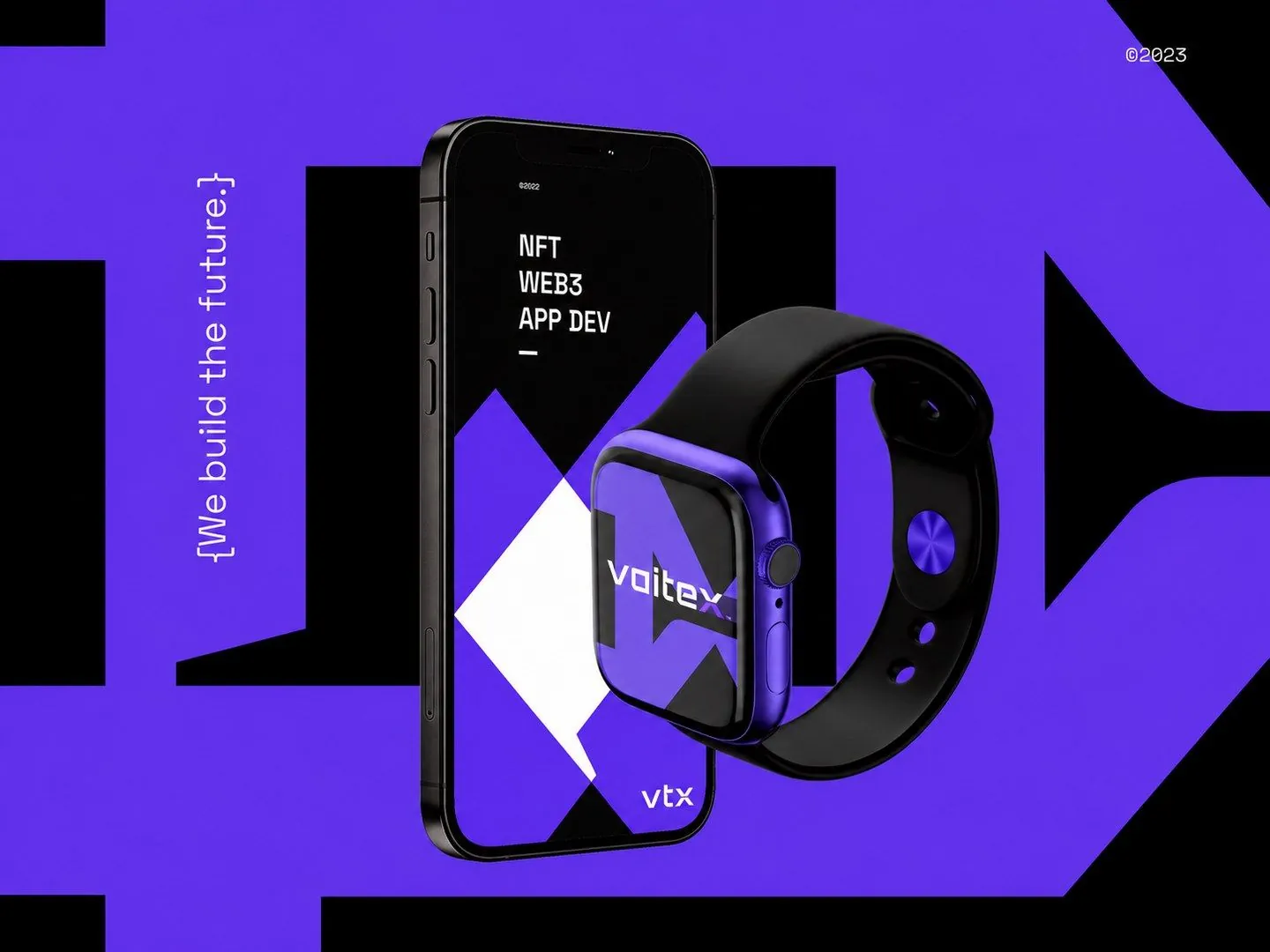
You don’t need everything on day one. Pick the places customers will see you first. For a DTC product, that’s packaging and Instagram. For a SaaS startup, it’s the website, app icon and pitch deck. You can see what a full set of applications looks like in the Voitex case study, from shipping-container signage to phone and watch screens.
Do you need brand strategy and a brand voice too?
For a straightforward launch, a clear brief can stand in for a formal strategy phase. Once you’re entering a crowded market, raising money or selling to premium customers, strategy earns its cost. It covers who you’re for, how you’re different from competitors, and how you sound in writing.
This is also where prices diverge. One 2026 industry guide puts a logo with basic visual direction at roughly $1,500 to $8,000. A complete identity system with a strategic foundation runs about $15,000 to $50,000 at that kind of firm, usually over six to ten weeks. Freelancers and small studios price lower. I broke down the full range in How Much Does a Logo Cost in 2026?.
Questions to ask a designer before you pay
Copy these into your next email to a designer:
- How many logo versions will I receive (primary, horizontal, stacked, icon, one-color)?
- Will I get color codes in HEX, RGB, CMYK and Pantone?
- Which fonts will you use, and do any need a paid license?
- Which file formats are included, and do I get the editable source files?
- Are brand guidelines included, and what do they cover?
- Which applications (business cards, social kit, mockups) are part of the package?
- How many concepts and revision rounds are included?
- Is the copyright transferred to me in writing, and is any of the design AI-generated?
If the answers come back vague, that tells you something too.
How I handle this for clients
I build every package around this checklist, so the deliverables are spelled out before we start:
- Basic, $250: one logo concept with color palette, typography, a mockup and stationery, with 2 revisions and 2-day delivery.
- Premium Branding, $450: three distinct concepts, complete brand guidelines, competitive analysis, a social media kit and business card, with 3 revisions and 2-day delivery.
- The Brand Ecosystem, $1,050: everything in Premium plus marketing strategy, brand voice, social and ad creatives, packaging and UI assets, in 5 business days, with unlimited revisions on the chosen concept.
Every identity is designed by me, not generated. Source files and copyright are included, the scope is confirmed in writing, and I’ll sign an NDA on request. Your first full brand board arrives within 48 hours. If you’re in tech or fintech, my tech and fintech branding page shows how this looks for that market. You can compare packages in the packages and pricing page or browse recent work.
For the full scope of what I deliver, see brand identity design services and brand guidelines design.
The bottom line
A logo is where a brand identity starts, not where it ends. Before you hire anyone, ask for the deliverables list in writing and check it against this checklist: logo system, color codes, typography, file package, guidelines and applications. The founders who get this right once don’t have to pay to fix it later.
Sources: Lucidpress via PR Newswire, Study Finds Companies with Consistent Branding Can See Up to 33% Increase in Revenue · ArtVersion, Brand Identity Design Services: What’s Included, What It Costs, and What to Expect (2026) · Google Search Central, Define a favicon to show in search results · Buffer, Social Media Image Sizes in 2026

Brand identity designer with 7 years of experience and 46+ brand identities for founders in tech, beauty, fashion, sports and food. Every logo designed by hand. More about me.
Want a logo you actually own?
Human-designed brand identities with full source files and copyright included. First brand board in 48 hours, from $250.